Vietnamese coconut jelly and coconut jelly cube: Clear, crispy and refreshing
Vietnamese coconut jelly is a popular coconut-based product known for its clear appearance and refreshing texture. Along with it, the coconut jelly cube has become a convenient format widely used in desserts and beverages. Its simple preparation and versatility make it suitable for both home use as well as food applications.
What is Vietnamese coconut jelly?
Vietnamese coconut jelly, also known as nata de coco, is produced from coconut water through a fermentation process that forms a transparent jelly layer. After fermentation, the jelly is cut into small pieces and is known for its clear appearance and firm, crispy texture.
This distinctive texture and appearance are key reasons why Vietnamese coconut jelly is widely appreciated by consumers.
Types of Vietnamese coconut jelly
In addition to nata de coco, Vietnamese coconut jelly also includes other variations such as coconut agar jelly and flavored versions, offering different textures and taste experiences.
Coconut agar jelly
Unlike nata de coco, coconut agar jelly is made by cooking coconut water with coconut milk and agar. The result is typically a two-layer dessert, with a clear layer from coconut water and a white layer from coconut milk.
This type of coconut jelly has a mild flavor, gentle sweetness, and a soft texture, making it a familiar dessert in many everyday settings.
Coconut jelly variations
In addition to traditional types, coconut jelly is also prepared in different variations using additional flavors. These variations offer different taste experiences while maintaining the refreshing qualities of coconut jelly.
As a result, Vietnamese coconut jelly continues to be used in a variety of products, reflecting its adaptability in different applications.
What are coconut jelly cubes?
Coconut jelly cubes are a dessert made from fresh coconut water and agar powder. After cooking, the mixture is left to set and then cut into small bite-sized pieces. The finished jelly is clear or milky white when coconut milk is added, offering a light, refreshing taste, a slightly crunchy texture, and a gentle, natural coconut aroma.
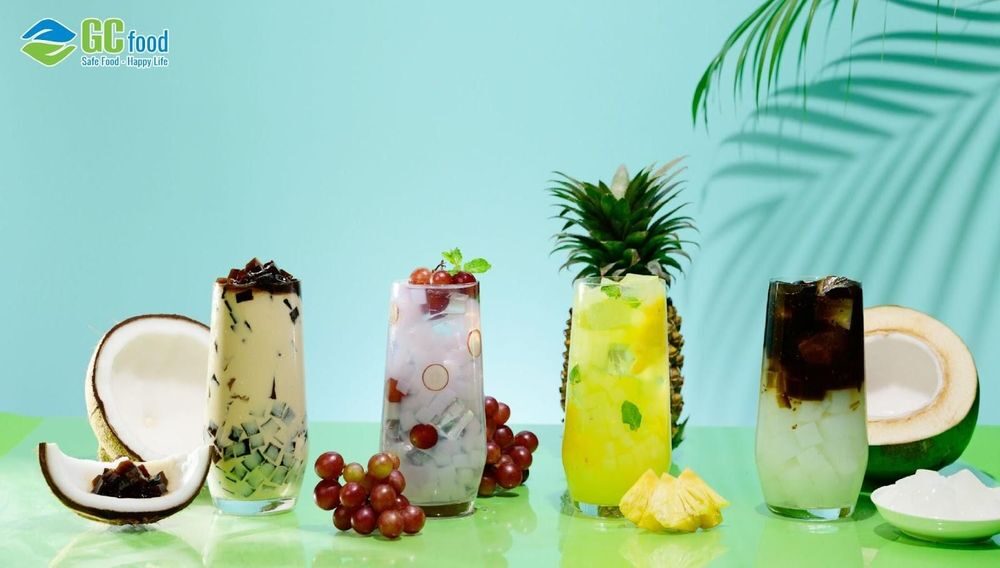
Coconut jelly cubes offer a light, refreshing taste.
Unlike regular agar jelly, coconut jelly cubes use fresh coconut water, giving them a naturally sweet and refreshing flavor. Thanks to their crystal-clear texture and cooling taste, they are often enjoyed as a refreshing snack at home or used as a topping for bubble tea, yogurt, and many other desserts.
Ingredients for clear and crispy coconut jelly cubes
In addition to following the correct method, using fresh ingredients and the right agar ratio is essential. When the ingredients are fresh and the proportions are accurate, the jelly becomes clearer, slightly crunchy, and retains the natural coconut flavor.
Estimated preparation time
- Ingredient preparation: 10 – 15 minutes
- Cooking time: 5 – 10 minutes
- Setting time: 1 – 2 hours
Ingredients (for 6 servings)
- Fresh coconuts (young or semi-mature): 2 coconuts (about 140 ml coconut water), keep the shells for molds.
- Agar powder (soft or crispy type): 70g
- White granulated sugar: 40g
- Coconut milk: 30ml
Ideal agar ratio
The ratio of agar powder plays an important role in determining texture. Using too little agar can result in a soft jelly that releases water, while too much agar makes the jelly too firm and reduces its refreshing quality.
With about 140 ml of fresh coconut water, using 70 g of agar powder helps create clear, lightly crunchy coconut jelly cubes that are easy to cut and visually appealing.
How to make clear and crispy coconut jelly cubes
To make clear and crunchy coconut jelly cubes, follow these simple steps:
- Prepare the coconut: Remove the outer skin, collect the coconut water, and keep the shells for molds.
- Mix ingredients: Combine agar powder, sugar, and coconut water until fully dissolved.
- Cook the mixture: Heat over medium heat, stirring continuously until it begins to boil.
- Pour into molds: Divide into two parts – one clear, one mixed with coconut milk, and pour into molds.
- Chill and cut: Refrigerate until set, then cut into small cubes.
The result is clear, slightly crunchy coconut jelly cubes ready to enjoy or use in desserts and drinks.
Ensuring consistent quality and supply of Vietnamese coconut jelly
As Vietnamese coconut jelly continues to be used in a wide range of products, maintaining consistent quality and supply becomes increasingly important.
In Vietnam, GC Food produces Vietnamese coconut jelly from coconut water using controlled processing systems. With its Vinacoco factory in Dong Nai, the company develops Ben Tre coconut jelly products that meet the requirements of markets such as the U.S., Japan, South Korea, and the Middle East. Its product range is supplied to both domestic and international markets, reflecting its expanding presence worldwide.
GC Food Nata de Coco is pasteurized using advanced technology.
Conclusion
Vietnamese coconut jelly is valued for its clear appearance and crispy texture, while coconut jelly cubes offer a convenient and versatile form for everyday use. From traditional nata de coco to agar-based cubes, these products continue to be widely used in desserts and beverages. Understanding their characteristics and preparation helps ensure better use and consistent quality across different applications.